Sinead Arrieta’s Early Greek History Blog
FINAL PROJECT FOR CHANDLER-GILBERT COMMUNITY COLLEGE, HST 110: GLOBAL HISTORY TO 1500, SPRING A 2020 DR. VICKNAIR
Early Greek Civilization
Early Greek civilization marks the time of great advances in technology, art, theatre, science, architecture, and philosophy that even up to our modern day civilization that we owe great credit to these creations and advances. This civilization is one of the most important to learn and understand as it helps us understand how our society was developed and the more you dig in deep to this early civilization you will see how much it has influenced our world today.
The history of Ancient Greece falls into three different time period which are the following-
The Archaic period- This period ran from the start of Greek civilization in 800 BC to 508 BC. This period marked the start of the Olympic Games and Homer’s writing of the Odyssey and the Illiad.
Classical Period- This was the time that great philosophers like Socrates and Plato existed. Also, the Persian War occurred during this time as well as the wars between Sparta and Athens were during this time, aka the Peloponnesian War. This period ended with the rise and then death of Alexander the Great in 323 BC.
Hellenistic Period- The Hellenistic period lasted until 146 BC when Rome conquered Greece. The name Hellenistic comes from the Greek word “hellens”, which is what the Greeks called themselves.

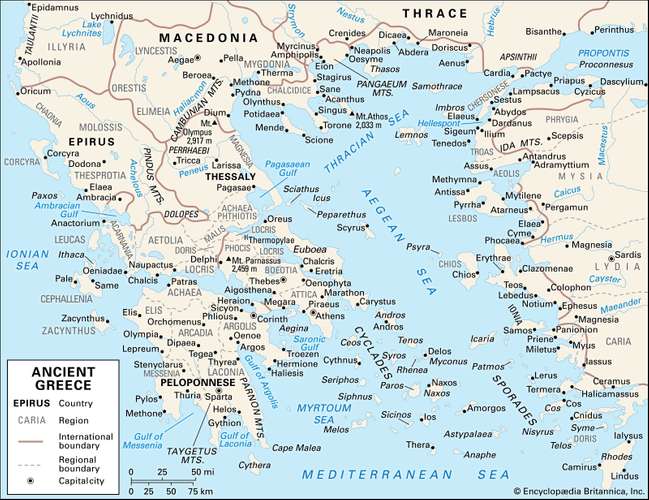
Hornblower, Simon. “Ancient Greek Civilization.” Encyclopædia Britannica, Encyclopædia Britannica, Inc., 4 Feb. 2020, http://www.britannica.com/place/ancient-Greece.
Greek Culture
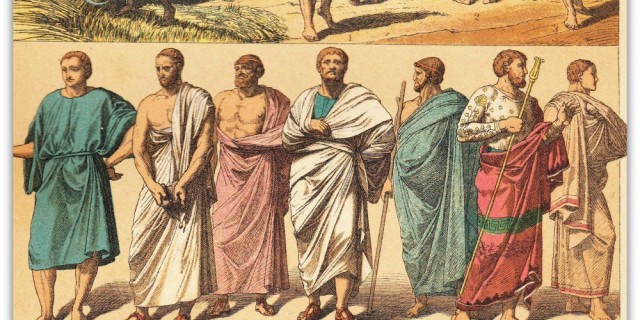
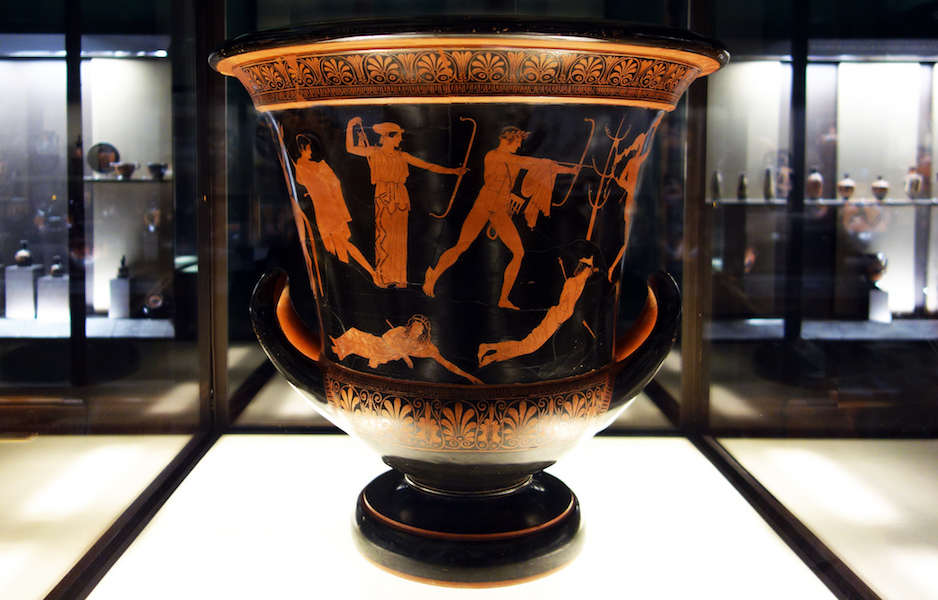
Ancient Greece was rich with culture, even was a main credit of influence of the Roman Empires culture as well as other civilizations, even our modern day civilizations culture. Every member of this society in the early greek civilization shared the same religion, language, and love of their culture. Herodotus described this as “the same stock and the same speech, our shared temples of the gods and religious rituals, our similar customs.”(History.com). All dressed in togas as presented in the image below, and all admired and were quite obsessive of beauty and human perfection. Also all had a love for the Olympic Games which originated in Ancient Greece in 776 in honor of the ultimate Greek God, Zeus.
They were divided in different social classes based on wealth. The Aristocats would be known as the wealthiest and were believed to be derived of the Greek Gods. These men would be holders of the political office.
The Gods and Goddess of Ancient Greece
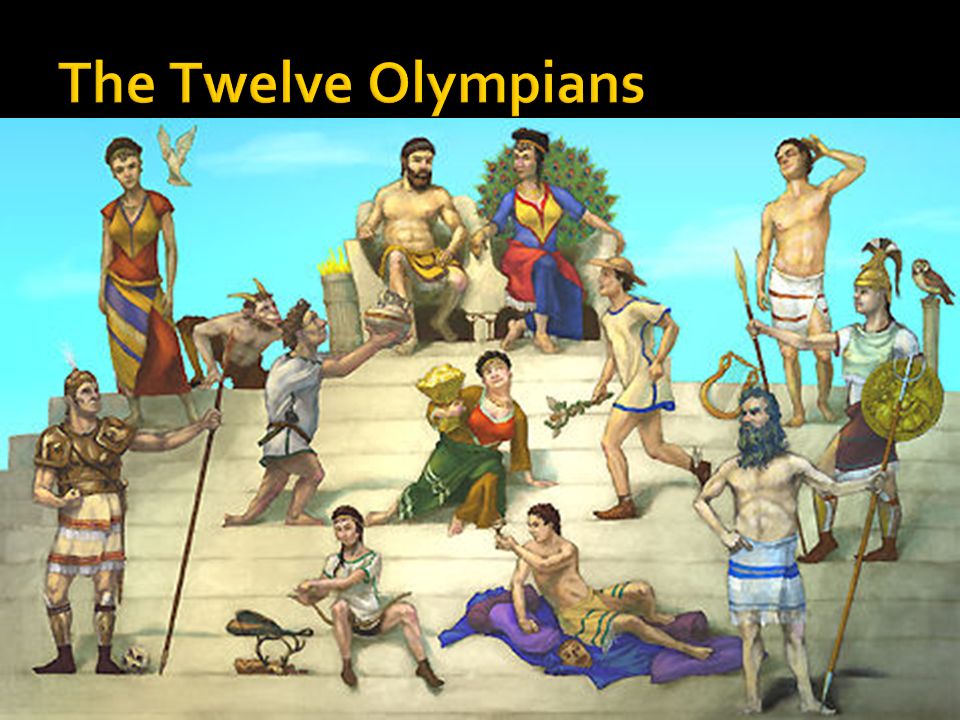
Greek Gods and Goddesses were the center of life for Ancient Greece. They were thought to have lived on the top of Mt. Olympus and they represented every aspect of life. The people of Greece would pray to certain Gods and Goddesses depending on what scenario in life they were currently going through. There are a total of 12 Gods/Goddesses but all were led by Zeus. Temples were created and were used to worship and perform more formal ceremonies that were conducted by priests, which interesting enough were either a man or women. Typically a priest or priestess would only represent one God/Goddess and according on their gender. The temples were dedicated to one God/Goddess as well for example Athena in the Parthenon of Athens or Zeus at Olympia. Up till today the stories that surround the Gods and Goddesses of Ancient Greece are found intriguing and influenceable.
Art
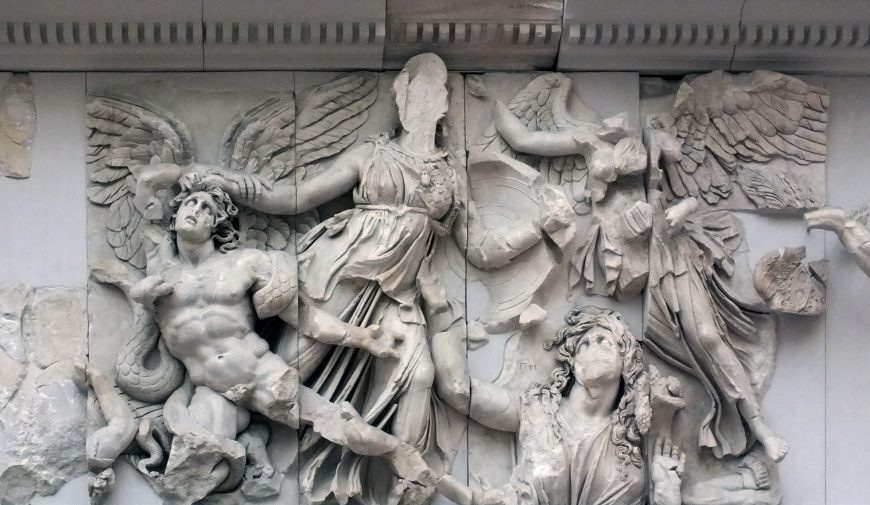
To the Greeks Pottery and Art was very meaningful, it was meant to show a reflection of human perfection. Very few paintings are left from that time period but a lot of sculptures and pottery have survived, reason being is because they used similar materials that they used on their architecture in this work, making it so it would last through out time.
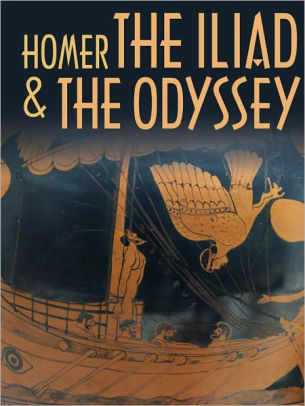
A look at Homers Iliad and Odyssey
If you want insight into The Trojan War, stories of mythology and of key figures of this historic time then take a read into one of the earliest records of literature on Homers “Iliad” and the “Odyssey.”
The poem “Iliad” takes takes place during the Trojan War and tells us how it was started by Helen of Troy being taken away by the Trojan Prince Paris. Helen of Troy was Zeus daughter and is known as the most beautiful women of all time, she was married to Menelaus, King of Sparta, but was said to have ran off with the Trojan Prince thus striking the war. Story goes on to express the affects and consequences of the war.
The Odyssey takes place after the Trojan War it is about Odysseus’s ten-year journey home to Ithaca after the Trojan War. On the voyage home, Odysseus and his men have to fight to get through scary monsters, while his wife Penelope fights men who want to marry her, which are 108 to be exact.
What is remarkable about these stories is how much reflection we get on how real life society was back in this early civilization. It also depicts on how women were viewed in society, for example Helen of Troy and Penelope were ultimately desired by their beauty. Men literally fought over and died because of the powerful influence that these women had.
Historian Bettany Hughes, closely examines Helen of Troy in documentary “The Ancient Worlds: Helen of Troy”(https://www.youtube.com/watch?v=X4T3Itt8mgs) as well has published a handful of books such as “Helen of Troy: The Story Behind the Most Beautiful Woman in the World”. Throughout the documentary we are taken throughout Greece and examine how iconic Helen of Troy is and the powerful political influence she had. We see that even in present day Greece her presence is on the art and theatre.
Bibliography
History.com Editors. “Ancient Greece.” History.com, A&E Television Networks, 5 Mar. 2010, http://www.history.com/topics/ancient-history/ancient-greece.
Hornblower, Simon. “Ancient Greek Civilization.” Encyclopædia Britannica, Encyclopædia Britannica, Inc., 4 Feb. 2020, http://www.britannica.com/place/ancient-Greece.Copy bibliography citation
Cartwright, Mark. “Ancient Greek Religion.” Ancient History Encyclopedia, Ancient History Encyclopedia, 28 Feb. 2020, http://www.ancient.eu/Greek_Religion/.
Follow My Blog
Get new content delivered directly to your inbox.
 Sinead's History Blog: Early Greek Civilization